Food for Wildlife
- Shobha Srinivasan
- Aug 26, 2024
- 4 min read
Updated: Aug 26, 2024
26/08/2024

Feeding wildlife is a satisfying activity for all ages. Instead of putting food out like seeds or apples, pears or pasta, cheese or the most common of them all, bread, why not plant out your garden with wildlife friendly food that is self sustaining in the long run. Natural food sources always trumps what we choose to feed animals.
There are so many options out there for the size of garden you have at your disposal. From ground covers to trees there is a myriad of choice. Shrubs are particularly important for the smaller birds - which use such undergrowth to escape from the bigger, predatory or bullies of the bird world.
When you plant make sure you are planting appropriately of course. Vigorous roots or plants that become too big may affect the integrity of drains, plumbing or foundations. These are expensive fixes when there is damage :(
Planting natives that suit your area means they will need less attention and perform better. Native or not though, we must be aware that some attention is always needed to keep the garden looking at its best.
Food and shelter is equally important. If you have trees with hollows or if you can scatter some nesting boxes in any trees in your garden, the wildlife will thank you for it. Make your garden friendly to a variety of animals from tiny gliders to cockatoos, kingfishers and owls.

The kind of plant you plant will attract different types of wildlife. Fruit and nuts for possums, bats, pigeons, figbirds and parrots. Nectar bearing flowers for the bees, butterflies, sunbirds or honeyeaters. Seeds for the finches. General foliage for insects that bring in the birds.
Having layers of foliage in your garden will not just make it look attractive to humans but each layer will offer a different habitat. A tidy garden is lovely to look at but incorporating mulch and leaf litter would also make your garden so much more interesting. If you can leave the leaf litter to break down in your garden areas, it is also much less work to get it into the green bins. A win all around.
So the benefits of attracting wildlife are many. Native species are better for the environment besides encouraging pollination in the area. Garden and agricultural pests are kept under control.
In these times of high stress, gardens that are a busy hub for many wildlife is a fantastic stress buster. It is said that the absence of bird song is actually detrimental to our mental health. Remember also that a lot of the Australian natives are nocturnal. This means your garden is working hard day and night.
What you plant will depend on where you live. Visit your local nursery for guidance and information. If you know your plants, you can also get more information online at sites like https://www.wildcare.org.au/Documents/Growing_plants_to_attract_wildlife_to_your_garden.pdf
If you live in an area where koalas live and visit, 4 food trees they love (in SE Qld) are the Forest Red Gum or the Queensland Blue Gum (eucalyptus tereticornis) Tallowwood (Eucalyptus microcorys) Small-fruited grey gum (Eucalyptus propinqua) and the Red Stringbark (Eucalyptus resinifera)

Birds that are Nectarivores (Honeyeaters, friarbirds, lorikeets and silvereyes) feed on nectar and insects. Frugivores (Orioles, pigeons, fruit doves and figbirds) generally go for fruit and also insects. Insectivores, (wrens, thornbills, robins, willy wagtails) no surprise, mainly eat insects and Granivores (finches, parrots, doves and ground pigeons) are well rounded opportunistic feeders of fruit, nectar, insects and seeds.
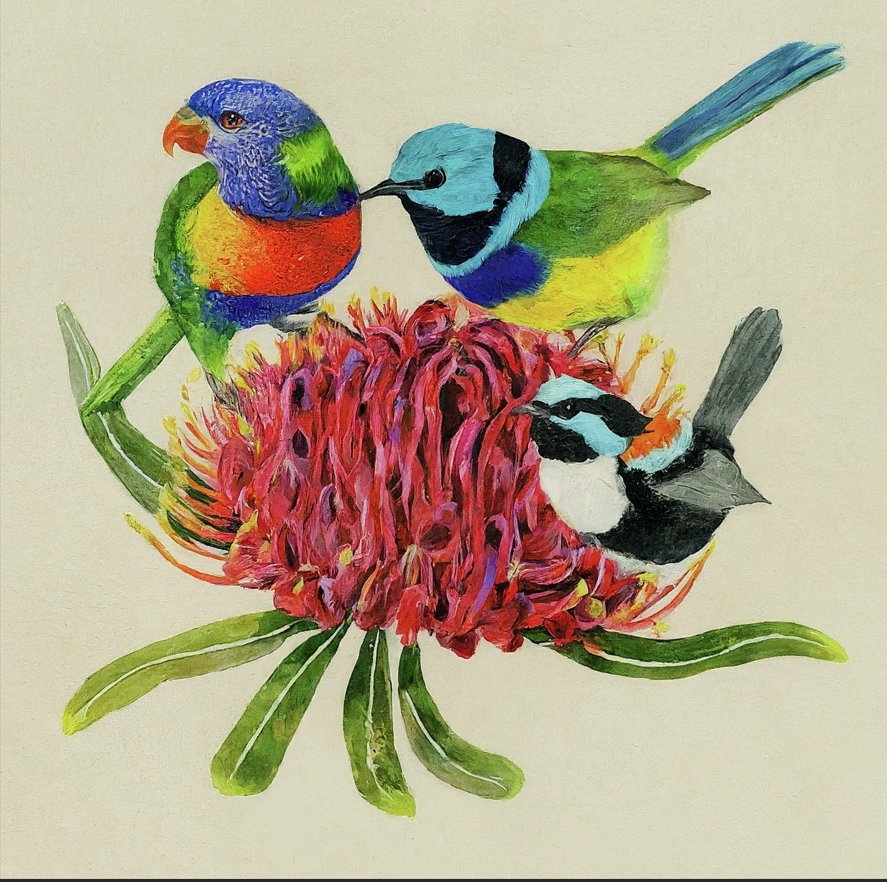
There is so much choice and depending on what you want to attract to your garden and where you live, there are a ton of useful resources like books. Your local library can help you with that.
The one book that I absolutely love for all the information and stunning photographs and illustrations is Birdscaping Australian Gardens. Using Native Plants to attract birds to your garden by George Adams. There are sections on How to Birdscape (will attract more than birds I am sure) and a Plant Directory and a Bird Directory.
So this has been just a short overview of a wildlife friendly garden. There's lots we can do to improve our environment and lots of resources out there to help us achieve that goal.
The best way to end this blog is to share some pictures from the garden of my friend, Sally. It started out as a very neat (and bare) garden and now it is a haven for friarbirds that quarrel with each other, brown honeyeaters who come to bathe, blue faced honeyeaters building nests, doves courting, willy wagtails and superb fairy wrens that flit about twittering and also building nests to raise their little families. There is even a heron who tries his luck in the pond where the goldfish live. To top it all, all this is co-exists with three dogs that have free access to the garden.
Visiting this charming backyard is always a treat for me and I don't have to do anything but sit and look over the water and enjoy the amazing life as it unravels all around. Sally has had the occasional feedback that her garden is 'messy'. I certainly cannot see it - nor do the birds that visit. We all think it is a place of wondrous beauty.
There are more than just natives in her backyard. Sally loves colour and the so flowers jostle for space with orchids and cactus. There are also lots of edibles, including herbs, tomatoes, bananas (flying fox favourites) mandarins, limes, lemons, grapefruit, papaya, passion fruit and lemon myrtle which is excellent in teas. It might sound like its a huge garden but really it is just well planted and well looked after. The attention it gets and some (a little stinky) organic fertilizer keeps everything lush and stunning.
Thank you for reading. Till next week, stay safe.
Enjoy Sally's garden pictures.


Keep up the good work!
excellent work on re doing the garden for native wildlife